Why Epoxy Floors Peel (And How Pros Prevent It)
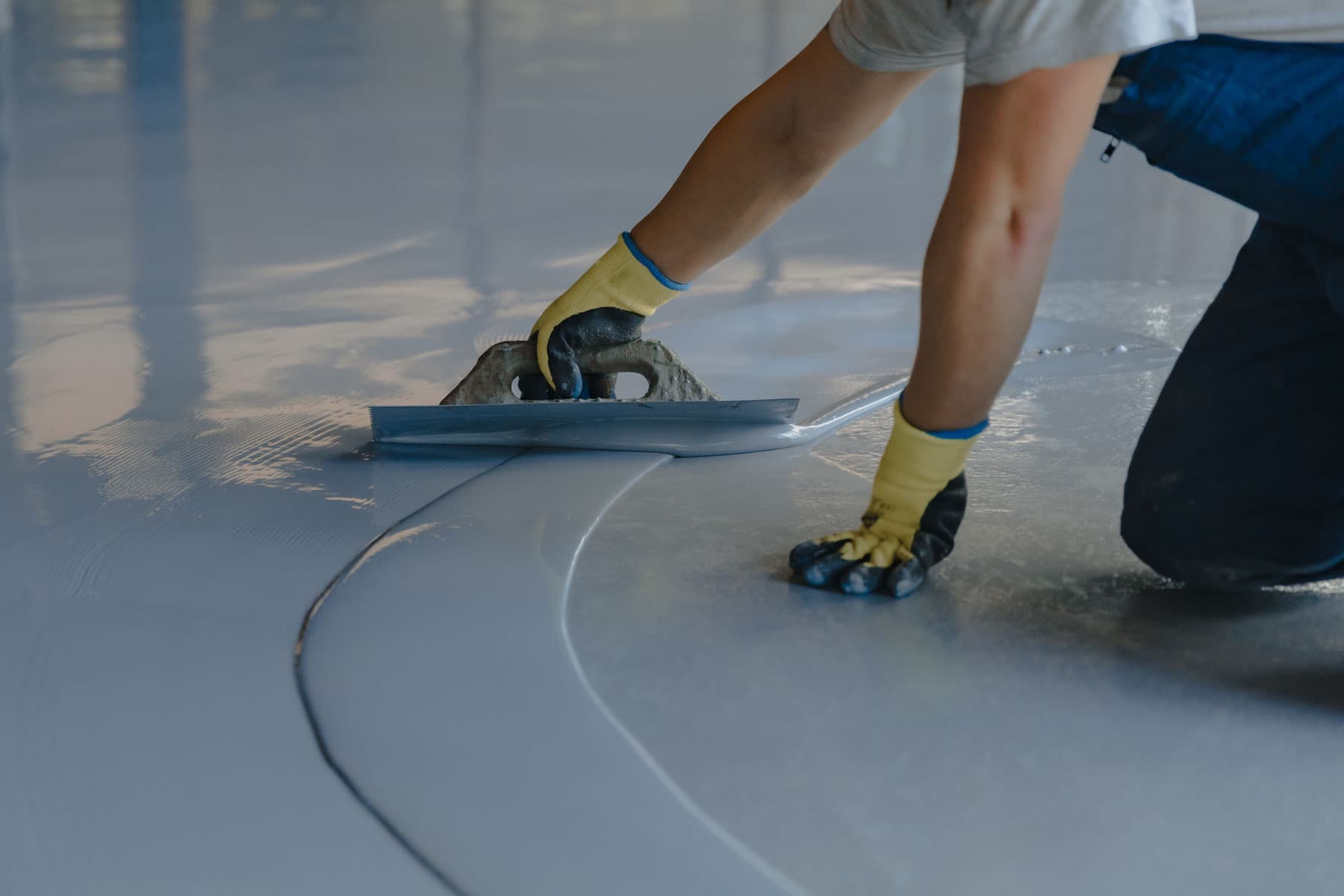
If you've seen an epoxy floor peel up in sheets, you already know how frustrating that is. People blame the product. Most of the time, the product never had a chance.
Peeling almost always traces back to prep, moisture, or the wrong system for the job. Here's what actually goes wrong, and what a proper Kamloops install looks like instead.
The #1 cause: skipping real surface prep
Epoxy needs a profile to grab. Smooth, sealed, or dirty concrete won't hold it. Acid wash alone is a shortcut. Diamond grinding opens the slab so the coating bonds into the concrete, not just sits on top of it.
Hardware-store kits and low-bid installs skip this step a lot. The floor looks fine for a few months. Then tires, moisture, or freeze-thaw start lifting edges. Once it starts, it spreads.
Moisture under the coating
Water vapour coming up through the slab will push against a closed coating. You get bubbles, soft spots, then peel. Garages, basements, and newer slabs are common spots for this in Kamloops.
A pro checks moisture before coating. If the numbers are high, you fix that first. You don't hope it works.
Oil, curing compounds, and old coatings
- Oil-soaked spots that never got ground out
- Curing compounds left on new concrete
- Old paint or failing epoxy coated over instead of removed
- Dust and residue left after a light clean
If the slab isn't clean and open, adhesion fails. That's why epoxy floor repair often starts with removing what's already failing, then rebuilding on a sound surface.
Wrong product for the climate
Kamloops winters are hard on floors. Soft topcoats chip. Non-UV-stable epoxy yellows in sunlit garages. A system that works in a mild climate can struggle here.
That's why we pair a solid epoxy base with polyaspartic coatings on many jobs. The topcoat takes the heat from tires, the sun, and daily wear.
What a peel-resistant install looks like
- Inspect and moisture-check the slab
- Diamond grind for a proper mechanical profile
- Repair cracks, spalls, and weak spots
- Apply the right base coat for the space
- Finish with a durable topcoat suited to traffic and UV
That process is the backbone of our garage floor epoxy and concrete floor coating work. Same idea whether it's a home garage or a commercial slab.
When the slab itself is the problem
Sometimes the concrete is too worn, pitted, or uneven for a thin coat alone. In those cases, concrete resurfacing can rebuild the surface before a finish system goes down. Coating a failed slab without fixing it just resets the clock.
Already peeling? We can fix it.
If your epoxy is lifting, don't keep patching over it. Call us. We'll look at why it failed, remove what's coming up, and put down a system that can actually stay put.
Want a quote on your garage?
Free on-site visit. Clear pricing. No pressure.
Services mentioned in this guide
We fix damaged concrete and failing coatings before applying a flawless new finish.
High-performance garage floor coatings that resist oil, chemicals, and heavy traffic.
Polyaspartic and polyurea coatings that bond to concrete and stand up to Kamloops winters.
UV-stable polyaspartic systems that cure in hours, not days. Scratch-resistant, colour-fast, and ideal for Kamloops's freeze-thaw winters.
Resurface worn, cracked, or stained concrete with a durable new layer. A cost-effective alternative to tearing out and replacing your slab.