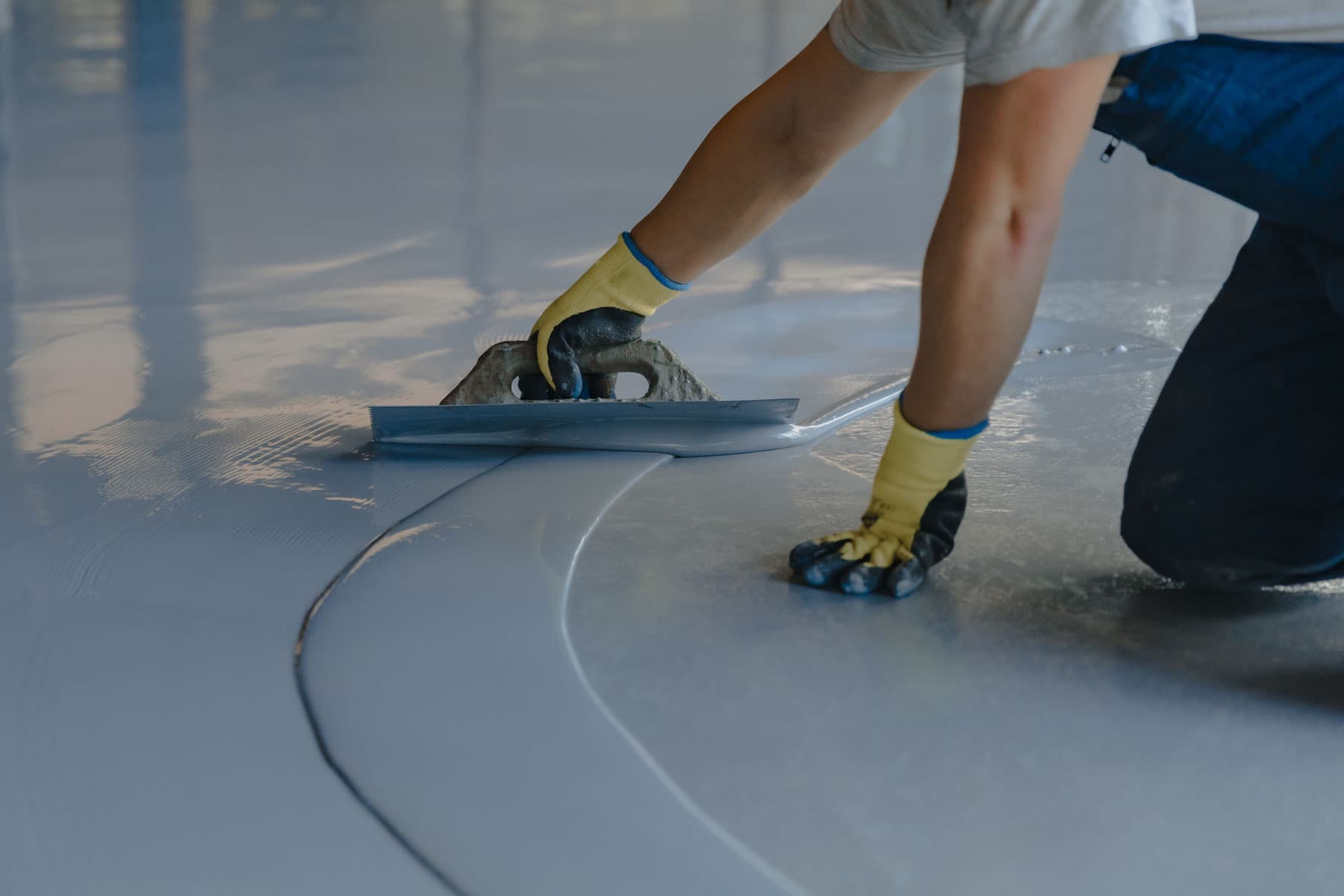
Concrete Floor Coating
in Kamloops, BC
Concrete floor coating covers a broader range of products than most people expect — it includes polyaspartic systems, polyurea coatings, concrete densifiers, penetrating sealers, and single or multi-coat topcoat systems. The right product depends on the slab, the use case, the traffic, and the environment. We assess first and recommend what actually fits — not the most expensive option and not the cheapest one that won't hold up.
What's included
- On-site slab assessment and moisture vapor testing
- System selection matched to use case and slab condition
- Diamond grinding or surface prep to required profile
- Primer or bonding coat where required
- Polyaspartic, polyurea, or concrete topcoat application
- Anti-slip aggregate where required
- Cure guidance and re-occupancy schedule
When you need this service
Exterior concrete (patio, driveway, walkway) needing weather protection and a finished look
Interior slab with light to medium traffic that doesn't need a full high-build epoxy system
Commercial or residential floor where fast cure and minimal downtime are priorities
Concrete that needs UV-stable protection without a thick coating build
Our process
Slab assessment and moisture test — we determine what the concrete needs and what it'll accept
System selection: we explain your options and recommend based on the actual slab and use case
Surface preparation to the profile required by the selected coating
Application in the specified number of coats with controlled film build
Cure inspection and return-to-service guidance
Why choose Elite Epoxy for concrete floor coating
- Honest system selection — we recommend what fits, not what's most expensive
- Polyaspartic coatings cure in 2–4 hours at 15°C+, often back to light traffic same day
- UV-stable aliphatic formulas for any sunlit or exterior application
- Cold-temperature rated systems for late-season work in Kamloops
- We'll tell you if your concrete needs more than a coating — not every slab is ready
We install concrete floor coating throughout Kamloops and the surrounding Thompson Okanagan region. See all areas we serve →
The difference between epoxy, polyaspartic, and polyurea coatings
These three product categories are often used interchangeably in marketing, but they're distinct chemistries with different performance characteristics, cure timelines, and ideal applications. Understanding the difference helps you understand what you're actually getting.
Epoxy is a two-part thermoset system that cures through a chemical reaction between a resin (Part A) and a hardener (Part B). It bonds aggressively to properly prepared concrete, builds to high thickness well, and forms a hard, impact-resistant film. The downsides: standard epoxy is UV-sensitive (it ambers and chalks in sunlight), requires above-10°C substrate temperature for proper cure, and takes 12–24 hours to reach traffic-ready hardness. It's excellent as a base coat — the structural layer of a multi-coat system.
Polyaspartic is an aliphatic polyurea compound that cures much faster (2–4 hours at 15°C), is UV-stable (won't yellow in sunlight), and reaches higher surface hardness than standard epoxy. It handles cold temperatures better and can be applied and cured at slab temperatures as low as −20°C with proper catalyst selection. The tradeoff is shorter working time during application — it requires experienced hands. Polyaspartic is our standard topcoat choice because of its UV stability and cold-weather performance.
Polyurea is the fastest-curing category — some formulations set in under a minute — making them primarily suited for spray application in industrial settings. Consumer and commercial-grade polyurea formulations are used as topcoats on epoxy base systems for chemical resistance. They're tougher and more flexible than polyaspartic in some formulations, making them the spec of choice for industrial floors that see thermal shock or impact loading.
When a standalone coating makes sense without a full epoxy build
Not every concrete floor needs a full multi-coat epoxy system. There are situations where a standalone polyaspartic or protective coating is the right answer — it depends on the traffic, the exposure, and what you're actually trying to accomplish.
A single-coat or two-coat polyaspartic system on a properly prepared slab works well for: covered patios and exterior concrete with light foot traffic, basement floors used for storage rather than living space, concrete in utility rooms with moderate foot traffic and occasional cleaning, and commercial spaces with light traffic where quick cure is the priority. These applications don't need the full thickness of a high-build epoxy system — and a properly applied polyaspartic coat gives good protection, UV stability, and easy cleaning without the cost of a more elaborate build.
Where standalone coatings don't work: vehicle traffic, heavy loads, chemical exposure, and floor areas that see abrasion from industrial equipment all require a properly built multi-coat system. A thin standalone coating on a slab that sees these conditions will wear through quickly. We tell you this before we quote, not after the coating fails.
Technical DetailSurface preparation for concrete coatings: the part that determines everything
The performance of any concrete coating — epoxy, polyaspartic, or polyurea — is determined almost entirely by how well the coating bonds to the concrete. That bond quality depends on surface preparation. A coating applied to a slab that wasn't properly opened, cleaned, and tested is a coating that's going to fail. The timeline is a matter of months to a few years, not a question of whether.
For concrete floor coatings we diamond grind to at least CSP 2 surface profile — fine sandpaper texture — which removes the weak surface paste layer (laitance), opens the concrete's pore structure so the coating can penetrate and mechanically bond, and eliminates any existing sealer or contamination that would prevent adhesion. We vacuum with HEPA systems as we go.
Moisture testing is part of every prep sequence. Even a concrete slab that feels dry to the touch can have significant moisture vapor emission — the concrete itself holds moisture and releases it as vapor pressure. That pressure builds under a coating and causes blistering or delamination. We test per ASTM F1869 before committing to any coating system, and we use vapor-mitigating primers on slabs that test above the threshold.
Common epoxy floor questions
Everything you want to know about epoxy floors before picking up the phone.
A professionally installed epoxy floor typically lasts 10–20 years with normal use. Garage floors in harsh climates like Kamloops can expect 10–15 years with proper maintenance.
Your epoxy floor won't
coat itself.
Call us or fill out the form and we'll get back to you the same day. Free on-site quotes with no obligation.