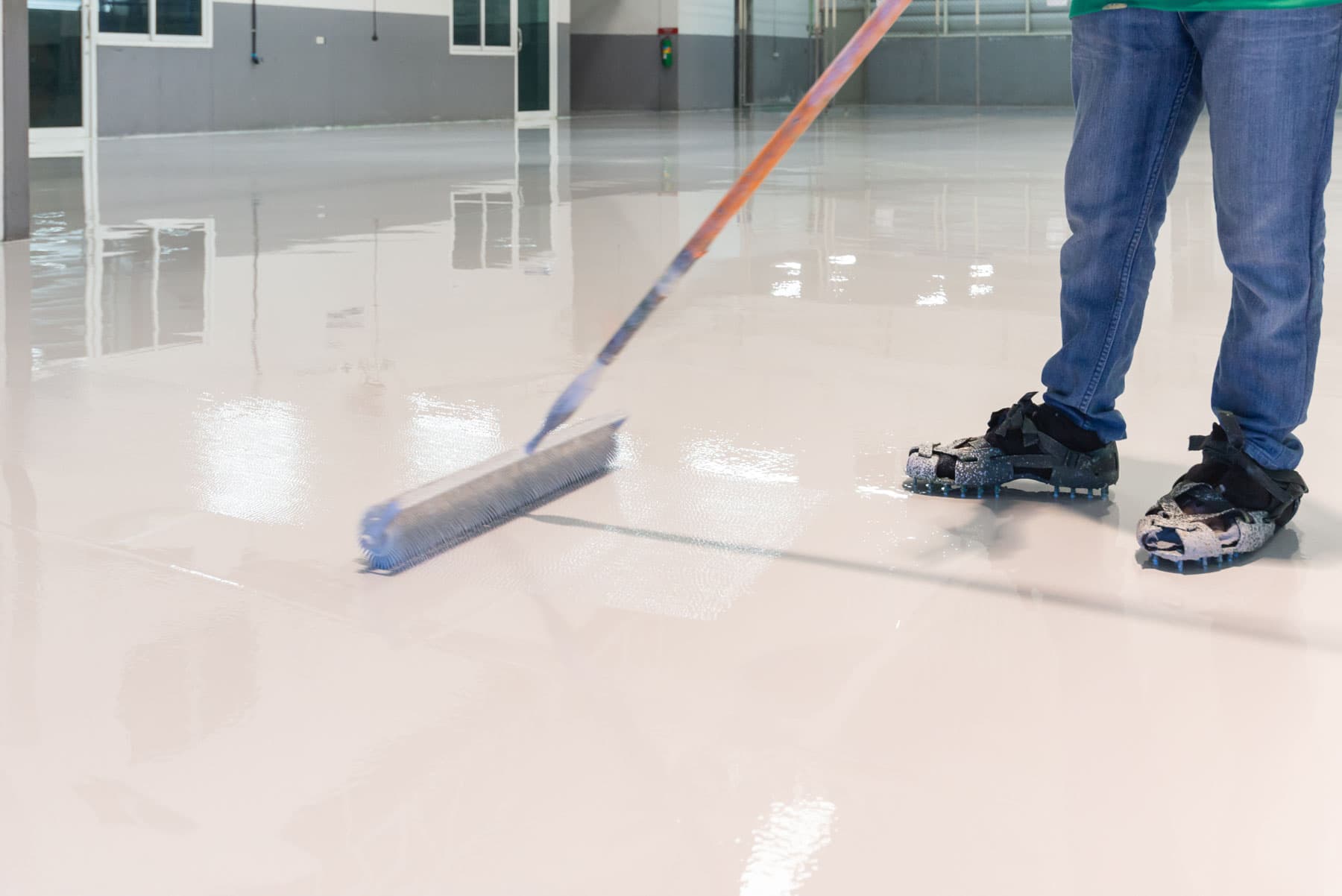
Polyaspartic Coatings
in Kamloops, BC
Polyaspartic coatings are a class of aliphatic polyurea compounds that combine the fast cure of polyurea with the surface quality and UV stability of a premium topcoat. They're our default topcoat choice on all residential garage floor systems and are increasingly specified as complete single or dual-coat systems for commercial floors where rapid return to service is required. Fast cure, UV-stable, cold-temperature-flexible, and hard-wearing — they're well-suited to Kamloops's climate and schedule requirements.
What's included
- Diamond grinding to CSP 2–3 surface profile
- Moisture vapor testing
- Crack and spall repair
- Polyaspartic primer or base coat
- Decorative flake broadcast if chosen
- UV-stable aliphatic polyaspartic topcoat
- Cure in 2–4 hours at 15°C+ — vehicle-ready in 12–24 hours
When you need this service
Garage or commercial floor where rapid return to service is important
Any floor exposed to UV through windows, skylights, or garage door openings
Late-season installs where slab temperature is near the limit for standard epoxy cure
Floor where you want a premium topcoat with longer service life than standard epoxy finishes
Our process
Application temperature check and scheduling — polyaspartic cure rate is temperature-dependent
Diamond grinding and full slab preparation
Moisture testing and primer application if required
Base coat and flake broadcast (for flake systems) or direct polyaspartic application (for single-coat systems)
Polyaspartic topcoat applied with controlled film build — requires skilled application due to short working time
Cure monitoring — light traffic in 2–4 hours, vehicle traffic in 12–24 hours
Why choose Elite Epoxy for polyaspartic coatings
- UV-stable aliphatic chemistry — won't yellow in sunlight, unlike standard aromatic epoxy
- Cures reliably in cold temperatures — application possible down to −5°C with correct catalyst
- 2–4 hour cure to light traffic — significantly faster than standard epoxy
- 75+ Shore D surface hardness — harder than standard epoxy finishes
- We use polyaspartic topcoats as our standard for residential garage floors because the performance justifies it
We install polyaspartic coatings throughout Kamloops and the surrounding Thompson Okanagan region. See all areas we serve →
What polyaspartic coatings actually are — the plain-language version
Polyaspartic coatings are two-part aliphatic polyurea systems. The chemistry is a variation on standard polyurea — the reaction between a diisocyanate (Part B) and an amine-functional compound (Part A) — but with an aliphatic diisocyanate and a polyaspartic ester as the amine component. The aliphatic structure is what makes it UV-stable. The polyaspartic ester is what gives it a longer working time than standard polyurea (which can set in under a minute in some formulations).
In practical terms: polyaspartic is significantly faster than epoxy (2–4 hours cure vs. 12–24 hours), UV-stable where standard epoxy is not, harder than standard epoxy finishes (75+ vs. 65–70 Shore D), and able to cure at lower temperatures than epoxy. The trade-off is shorter working time during application — 20–45 minutes depending on temperature — which requires experienced applicators who can cover the floor area within that window.
The short working time is why polyaspartic isn't a good DIY product. An experienced installer manages the working time by mixing small batches, working in sections, and controlling temperature. An inexperienced applicator risks the product beginning to set before the coat is finished, leaving overlap marks, texture variation, and compromised film quality.
The advantages of polyaspartic in Kamloops's climate
Polyaspartic's combination of UV stability, cold-temperature cure, and fast return to service is particularly well-matched to Kamloops conditions.
UV stability matters here more than in most Canadian cities. Kamloops sees over 2,000 hours of sunlight annually — one of the sunniest cities in BC. A garage floor with a standard aromatic epoxy topcoat and a south-facing orientation will show visible yellowing and chalking within one to two seasons. The aliphatic chemistry of polyaspartic doesn't undergo this photodegradation. The floor looks the same in year five as it did on install day.
Cold-temperature cure is important for the shoulder seasons — late October through March in particular. Standard epoxy needs substrate temperature above 10°C for proper cure; below that, cure is incomplete and the film underperforms. Polyaspartic cures reliably at slab temperatures down to −5°C (with appropriate catalyst selection for cold conditions), which extends our working season significantly and means we can complete jobs in late fall that standard epoxy crews can't.
Fast cure is a practical benefit for any garage owner. The floor is back to light traffic in 2–4 hours after the topcoat goes on — most residential garage installs are completed in a single day, and the homeowner is parking their car the next morning. Standard epoxy topcoats need 12–24 hours before vehicle traffic and 72 hours for full chemical resistance.
Technical DetailPolyaspartic vs. epoxy vs. polyurea: where each fits
These three coating categories aren't interchangeable, and understanding where each excels helps clarify why we specify them the way we do.
Epoxy is the structural workhorse — best for base coats that need thickness, impact resistance, and aggressive bond to concrete. It builds high film thickness well, is the most cost-effective way to add coating mass to a system, and bonds more readily to a wider range of substrate conditions than polyaspartic or polyurea. We use epoxy for base coats on all our multi-coat systems.
Polyaspartic is the premium topcoat — UV-stable, fast-curing, hard, and weather-resistant. It's our standard choice for the topcoat layer on residential garage floors and most commercial installations. The additional cost over standard epoxy topcoats is justified by the UV stability and longevity, especially in Kamloops's sunny climate.
Polyurea in its spray-applied form is the industrial topcoat — extremely fast cure (seconds to minutes), maximum flexibility and impact resistance, and the highest chemical resistance of the three. It requires specialized spray equipment and trained applicators, and it's primarily used in industrial settings, containment applications, and large commercial floor projects where maximum performance is required. Consumer-grade 'polyurea' products are often really slower-cure polyaspartic formulations marketed under the polyurea name — the terminology in this category is imprecise in the market.
Common epoxy floor questions
Everything you want to know about epoxy floors before picking up the phone.
A professionally installed epoxy floor typically lasts 10–20 years with normal use. Garage floors in harsh climates like Kamloops can expect 10–15 years with proper maintenance.
Your epoxy floor won't
coat itself.
Call us or fill out the form and we'll get back to you the same day. Free on-site quotes with no obligation.