Concrete Sealing
in Kamloops, BC
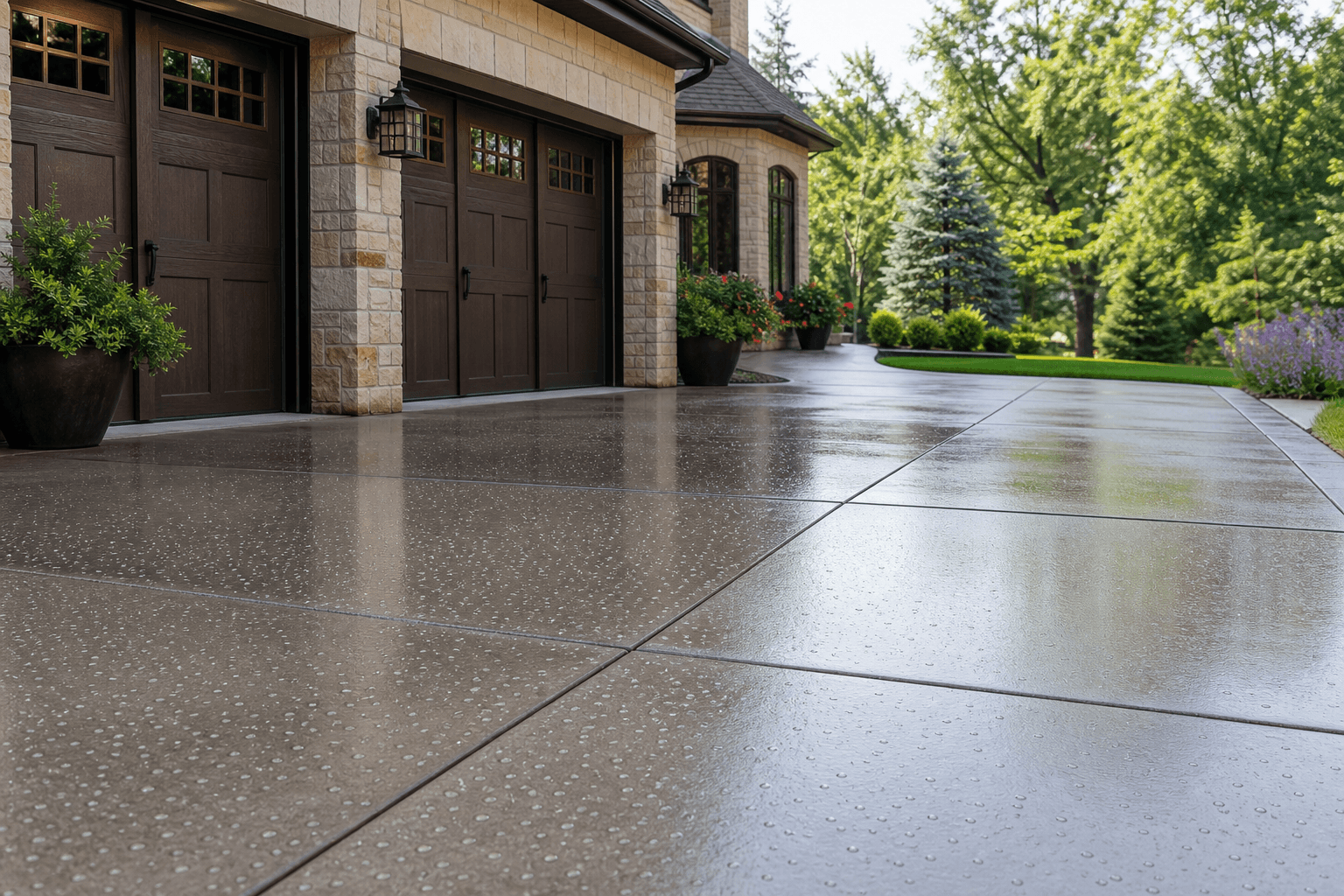
Unsealed concrete absorbs water, oil, and road salt. In Kamloops's climate — where freeze-thaw cycling is aggressive and UV exposure is high — that absorption is what turns a solid slab into a scaling, stained, crumbling surface over 10–15 years. Concrete sealing is the most cost-effective maintenance you can do for any concrete surface. We apply penetrating and topical concrete sealers to driveways, patios, garage slabs, and basement floors throughout Kamloops and the Thompson Okanagan.
What's included
- Surface inspection and assessment of concrete condition and existing sealers
- Pressure washing and degreasing
- Crack and joint preparation
- Penetrating silane/siloxane sealer (for exterior, water and chloride resistance)
- Or topical acrylic/polyaspartic sealer (for gloss, stain resistance, and interior use)
- Even application with no lap marks or missed spots
- Cure inspection and maintenance care guide
When you need this service
New concrete slab you want protected before moisture and chlorides penetrate
Driveway, patio, or walkway showing early staining or water absorption
Garage slab that isn't getting a full epoxy system but needs better protection
Basement floor with minor moisture vapor you want managed with a sealer
Our process
Inspect the slab, test for existing sealers with a water drop test, and assess condition
Pressure wash and degrease the surface — sealer won't penetrate or adhere to a dirty slab
Fill cracks and open joints with flexible caulk or semi-rigid filler
Apply the specified sealer in the correct coverage rate and number of coats
Allow full cure before traffic — timing varies by product and temperature
Walk-through and honest guidance on re-application schedule
Why choose Elite Epoxy for concrete sealing
- We spec the right sealer for the use case — penetrating for exterior, topical for interior shine
- Honest assessment: we'll tell you if your concrete needs repair before sealing will help
- Works in Kamloops's climate, including cold late-season applications with appropriate products
- We don't resell products that don't hold up in BC Interior conditions
We install concrete sealing throughout Kamloops and the surrounding Thompson Okanagan region. See all areas we serve →
Penetrating sealers vs. topical sealers: a real difference, not just marketing
There are two fundamentally different types of concrete sealers, and confusing them leads to using the wrong product for the application. Penetrating sealers and topical sealers look similar in a jug, are often sold side by side, and do completely different things.
Penetrating sealers — silane, siloxane, or silane-siloxane blends — work by soaking into the concrete surface and reacting chemically with the calcium silicate in the cement matrix. The reaction creates a water-repellent barrier within the concrete itself, blocking water and chloride penetration from the inside. Penetrating sealers don't change the surface appearance or create a film layer — the concrete looks essentially the same after application. They protect from within, they breathe (vapour can still pass out), and they don't peel or delaminate because there's nothing on the surface to peel.
Topical sealers — acrylic, epoxy, polyurethane, or polyaspartic — create a film layer on the concrete surface. That film blocks water, oil, and staining agents, and gives the surface a sheen (anywhere from matte to high-gloss depending on the product). Topical sealers are visible, they wear off over time under traffic, and they need to be reapplied periodically. They're the right choice when surface appearance matters — you want a sheen on an interior floor — or when stain resistance is the primary goal.
For exterior concrete in Kamloops — driveways, patios, exterior flatwork — we almost always specify a penetrating silane-siloxane sealer. It provides the most durable long-term protection, handles freeze-thaw cycling without peeling, doesn't create a slippery film on wet concrete, and doesn't need to be reapplied as frequently as topical systems. For interior floors where you want a surface sheen, a topical system is the right answer.
Why concrete sealing matters more in Kamloops than in milder climates
Kamloops sits in a semi-arid interior climate with hot, dry summers and cold winters that include regular freeze-thaw cycling. That combination creates specific concrete degradation patterns that are more aggressive than coastal or temperate areas.
The freeze-thaw cycle is the primary enemy of unprotected concrete in Kamloops. Rainwater and snowmelt absorb into the surface of unsealed concrete. When temperatures drop below freezing, that absorbed water expands as it freezes — by about 9% in volume. That expansion creates micro-pressure within the concrete surface that fractures the cement matrix. Over 10–20 freeze-thaw cycles per year, those micro-fractures grow, surface spalling begins, and the slab starts to look and feel rough and pitted. Salt from de-icing accelerates the process significantly.
A penetrating silane-siloxane sealer applied to a clean, dry slab blocks the water absorption that starts this process. The sealer's water-repellent effect means water beads on the surface rather than soaking in, so there's far less free water in the concrete matrix to freeze and expand. It's simple chemistry, and it works — properly sealed driveways in Kamloops consistently outlast unprotected ones by 15–20 years.
When concrete sealing isn't enough: knowing the limits
Concrete sealing is a maintenance and protection measure — it's not a repair. There are situations where sealing is the right first step and situations where it won't accomplish what the owner is hoping for.
Sealing works well on concrete that is structurally sound with surface staining, early surface wear, or minor porosity. It's most effective when applied early — before the concrete has accumulated years of absorbed moisture, salt, and contamination. Applied to clean, relatively new concrete, a penetrating sealer provides excellent long-term protection.
Sealing won't fix active cracking, significant surface spalling, structural settlement, or slabs that are absorbing water from below through capillary action. If we assess your concrete and find it needs more than sealing, we'll tell you straight — and we'll explain what the options are, including resurfacing, repair, or a full epoxy coating system. We'd rather give you an honest assessment than sell you a service that doesn't solve the problem.
Common epoxy floor questions
Everything you want to know about epoxy floors before picking up the phone.
A professionally installed epoxy floor typically lasts 10–20 years with normal use. Garage floors in harsh climates like Kamloops can expect 10–15 years with proper maintenance.
Your epoxy floor won't
coat itself.
Call us or fill out the form and we'll get back to you the same day. Free on-site quotes with no obligation.